
Gift ideas
How to Gift a Song Without Making the Moment Awkward
A song can be a deeply personal gift without needing a public reveal. The private link, the note beside it, and the moment you choose to share it all shape how comfortable the gift feels.
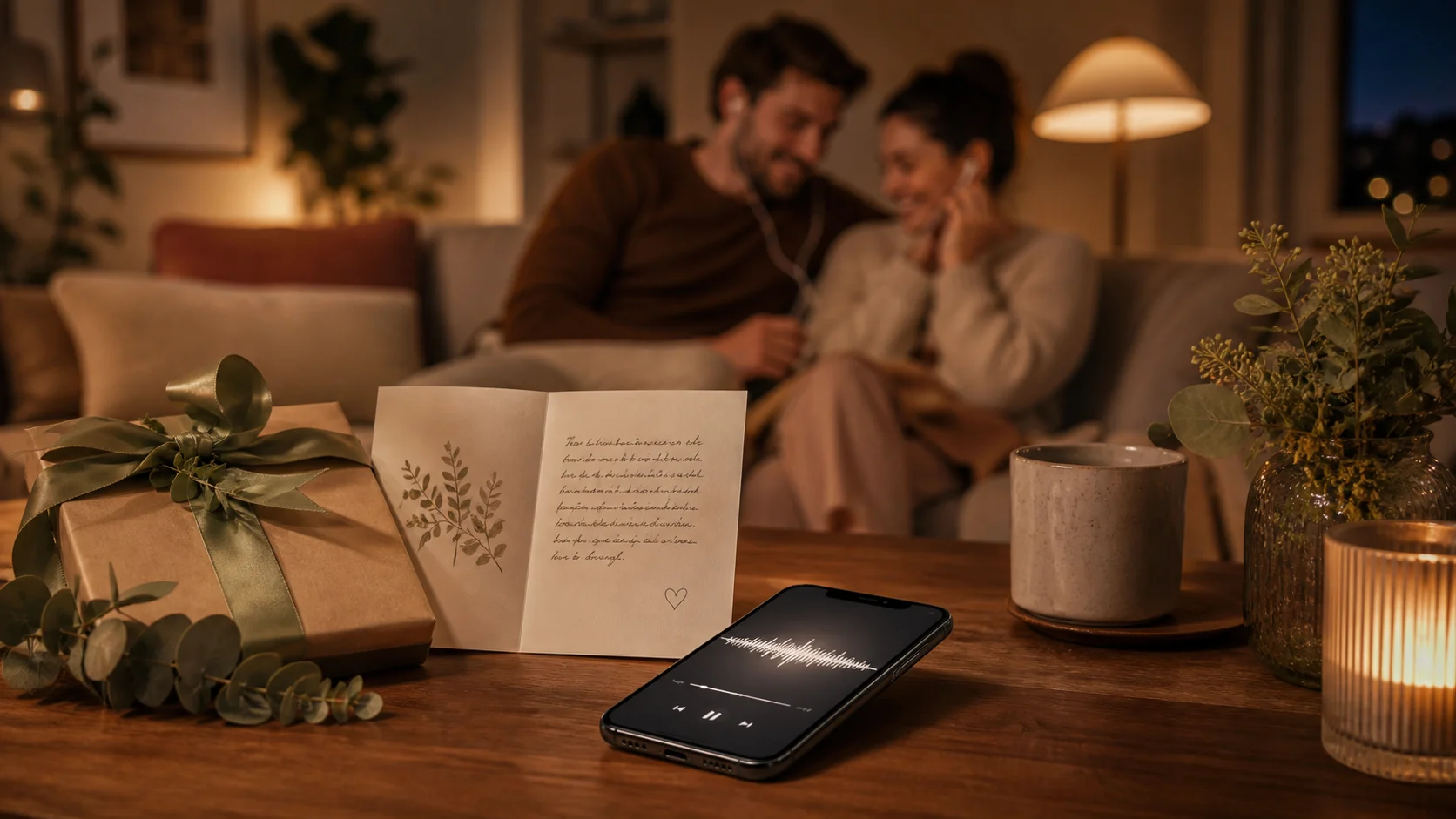
When a song makes the right kind of gift
Learning how to gift a song starts with the reason behind it. A song works well when you want to give someone a memory, a message, or a small piece of shared history in a form they can hear again. Instead of adding another object to a shelf, you are creating a listening moment that says, “I noticed this part of us and wanted you to have it.”
That does not mean a song should be delivered in the biggest possible way. Some recipients enjoy a room full of friends and a dramatic surprise. Others prefer to open a private message, put on headphones, and decide when they are ready to react. The gift becomes thoughtful when the handoff matches the person, not when it creates the most visible response.
Before you choose a link, card, or occasion, decide what you want the listener to carry away. It might be gratitude, encouragement, affection, pride, or a reminder of a place you both remember. That emotional center helps you choose the right story and keeps the gift from becoming a collection of unrelated compliments.
What does it mean to gift a song?
The phrase “gift a song” can describe several different gestures. You might send an existing track, build a playlist, or create a custom song from a story. A custom song is different because its value comes from the connection between the listener and the details inside it. The recipient should be able to understand why you chose this song for them, even if the handoff only takes a minute.
A personal song gift has three parts. First comes the story: the person, the occasion, the memories, and the message. Second comes the song itself: the lyrics, voice, melody, and version you decide to keep. Third comes the delivery: a private gift page, a short note, and enough time for the listener to receive it without being rushed.
You do not need to present a private gift as a public release or a studio production. A small, story-led song can be meaningful precisely because it is made for one person. Keep the promise clear: you are offering a personal song to listen to and share privately, not guaranteeing a performance or a product that the service does not provide.
- Existing track: share music that already expresses a feeling.
- Custom song: turn a relationship, memory, and message into a new song idea.
- Song gift: pair that song with a clear explanation and a handoff the recipient can control.
Use a private gift page instead of a loose file
A private link gives the gift a home. Once the song is unlocked, a gift page can keep the cover, dedication, lyrics, and full playback together. The recipient does not have to search through an attachment or create an account before hearing what you prepared. You can introduce the link in one message and let the page explain the rest.
Before you send it, check the selected version, the spelling of the recipient’s name, and the dedication. If you are writing the link on paper, copy it carefully and keep the card somewhere safe until the handoff. A tiny test on your own device can prevent the awkwardness of sending the wrong address or a link that you intended to keep private.
Private means private. Do not treat the link as a public profile, a party page, or a piece of promotional content. If other people helped make the gift, decide together who should receive access. Easy sharing is useful, but the recipient should remain in control of whether the song is played for anyone else.
- Review the cover, dedication, lyrics, and selected version.
- Explain the link in a message rather than sending it without context.
- Share access only with people who belong in the moment.
- Keep a private gift page separate from public examples or profiles.
Pair the link with a handwritten note
A note gives a digital song a human beginning. It does not need to summarize every lyric. Write one sentence about the memory that led you to the idea, or tell the recipient what you hope they notice when they listen. A detail about the first place you met, a shared habit, or a moment of support can make the link feel intentional rather than like a random media attachment.
You can quote a short line from the song if it makes sense on its own. Choose a line that opens the door to the listening experience instead of explaining the whole story in advance. The recipient should still have something to discover when the music starts. A simple “I made this from the story of our rainy train trip” may be enough.
A note is also a good place to remove pressure. Tell the person they can open the link when they have a quiet moment. If you are giving the card at a gathering, let them decide whether to listen there or later. The ability to choose is part of the gift, especially when the song contains intimate memories.
- Mention one real memory rather than a stack of generic compliments.
- Use your natural voice and keep the explanation short.
- Write the private link clearly and check it before handing over the card.
- Say that listening later is completely fine.
Choose a listening moment that fits
The right listening moment is usually the one where the recipient can pay attention without performing a reaction. A quiet morning, a walk after dinner, a pause at home, or a small conversation may be more comfortable than playing a personal song while everyone else is talking. Think about the person’s habits and the kind of attention they normally enjoy.
If you are considering a group reveal, look at the story first. Details that feel affectionate in private may feel exposing when several people hear them at once. You can hand over the card in public and invite the recipient to use the private link later. That keeps the celebration warm while leaving the actual listening decision with them.
Timing does not have to match the calendar perfectly. A song shared in the morning can set the tone for a day. A link sent after an event can become a calm ending. A small delay can even make the gift easier to receive because it is no longer competing with food, photographs, speeches, or other conversations.
- Private: offer headphones or a quiet room and let the recipient choose the pace.
- Small group: include only people connected to the story.
- After an event: use the song as a calm closing moment.
- Later: send the link with no expectation of an immediate reply.
Choose details that make the story recognizable
A custom song does not become personal by containing every fact about a relationship. It becomes personal when a few details could only belong to that person. Look for a place you both remember, a phrase they repeat, a small ritual, or an action that showed care when nobody else was watching. These details give the lyrics texture and help the listener recognize the relationship without a long explanation.
Write the story as prose first. Describe what happened, how it felt, and what you understand about it now. You do not need to produce polished lyrics or a rhyme scheme. Once the material is on the page, keep the strongest scene and the message you want to leave behind. A focused song usually feels more honest than one that tries to mention every important year.
Specific does not mean exposed. Leave out passwords, medical information, financial details, private arguments, or other people’s stories unless they are essential and welcome. The goal is recognition, not documentation. Ask whether the recipient would be comfortable hearing each detail sung, especially if the link might later be played around friends or family.
- One place or moment the listener can picture.
- One habit, phrase, or ritual that belongs to the relationship.
- One action that demonstrates the quality you want to celebrate.
- One message you would say even without music.
- A clear boundary around details that should remain private.
Review the lyrics before sharing the song
Read the complete lyrics before you treat the song as ready to give. Check names, pronouns, places, dates, and the order of events. A tiny error can turn a personal gift into a confusing one. This review is especially important when the story contains several people or memories that happened in different seasons of your life.
Read for voice as well as accuracy. Does the wording sound like something you would say to the recipient? Is a joke kind in the planned setting? Does a private detail create warmth, or does it make the person feel observed? Replace broad praise with a scene when you can, and remove lines that expect the recipient to react in a particular way.
A lyric review is not a demand for literary perfection. It is a chance to make sure the song respects the relationship. With a guided creation flow, you can review and edit the lyrics before listening to the song versions. Use that control to keep the message specific, comfortable, and recognizably yours.
- Confirm names, relationships, pronouns, and important facts.
- Replace a generic compliment with a memorable action or scene.
- Remove anything the recipient would not want repeated aloud.
- Read the words out loud to hear awkward or unfamiliar phrasing.
Compare two short previews before choosing
Lyrics can look perfect on a screen and feel different when sung. Listen to the preview for the line that carries the main memory, the way the name lands, and whether the music leaves space for the message. You are not only asking whether the track sounds polished. You are checking whether it sounds like a gift this particular person would want to receive.
Melodank lets you hear two 60-second song versions after the lyric review. Treat those excerpts as real decision information. One version may feel warmer, another may give the story more movement, and one may fit a private evening better than a group setting. Choose the version that supports the occasion and the recipient’s comfort.
If neither preview feels right, return to the story before assuming that more decoration will solve the problem. The uncertain feeling may come from a wrong fact, a vague message, or a style that does not match the person. Previewing before using a credit helps you notice that early and make an informed choice.
Protect the recipient’s comfort and privacy
A song can be intimate without becoming an emotional test. Some people like a visible surprise; others need time to process a meaningful message. If you are unsure, use a private link and say that the recipient can listen whenever they feel ready. That wording makes the gift an invitation instead of a demand for a public reaction.
Consider everyone whose story appears in the lyrics. An inside joke may be perfect for the recipient but uncomfortable for another person mentioned in the same memory. Use only details you can responsibly share, and remove anything that would expose someone else’s private life. The song can remain vivid without naming every part of the background.
After the handoff, remember that the link still contains personal material. Do not pressure the recipient to forward it or play it for a group. If they want to share the song, that should be their choice. A respectful gift protects the listener before, during, and after the first play.
- Do not require an immediate reaction or public listening session.
- Include only personal details that are necessary and welcome.
- Send the link through a channel suited to the intimacy of the message.
- Let the recipient decide whether anyone else hears the song.
A simple checklist for the handoff
A thoughtful song gift can follow a short sequence. Start with the person, occasion, and one scene. Review the lyrics for names, tone, and privacy. Listen to both 60-second versions and choose the one that feels most natural. Unlock the selected version with a song credit, add the cover and dedication, and check the private gift page before sending its link.
When you hand it over, give the recipient a sentence of context and a clear choice about when to listen. The card or message can say why this story mattered to you without turning the moment into a speech. If they listen immediately, be present. If they wait, do not assume that waiting means the gift failed.
The strongest answer to “how do I gift a song?” is usually simple: make the story specific, make the link easy, make the message human, and give the recipient room. The song does not need a grand stage. It needs a real reason to exist and a delivery that honors the person who will hear it.
- Write the person, occasion, story, message, and listening setting.
- Review the complete lyrics and compare both short previews.
- Unlock one version, then add a cover, dedication, and private link.
- Pair the link with a brief note and a comfortable listening option.
- Leave the recipient free to listen, respond, and share at their own pace.
Keep reading
Start with your story
Bring one person, one memory, and one message into the creation flow, then review the lyrics before preparing a private song gift.
Create a song